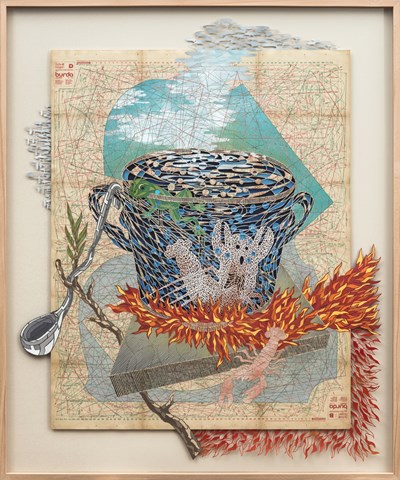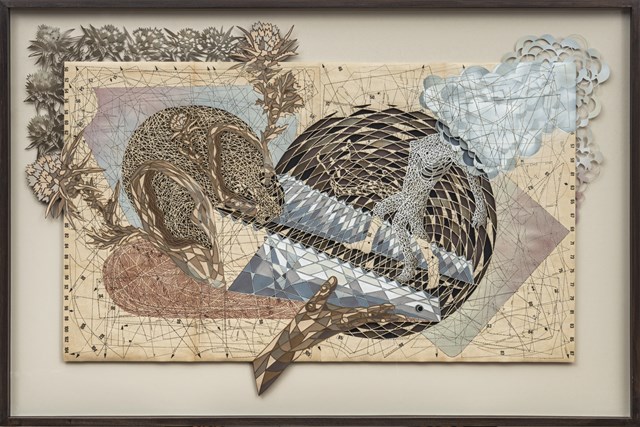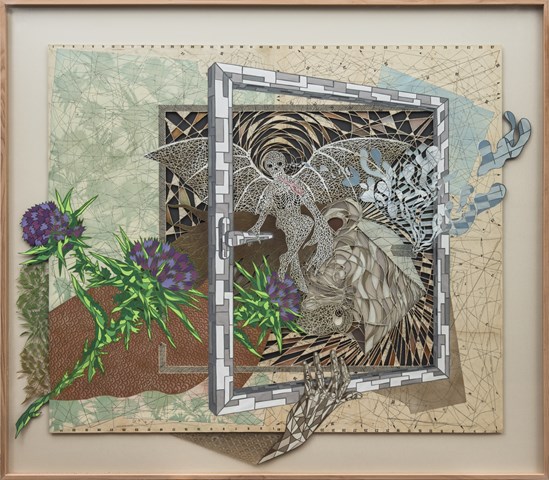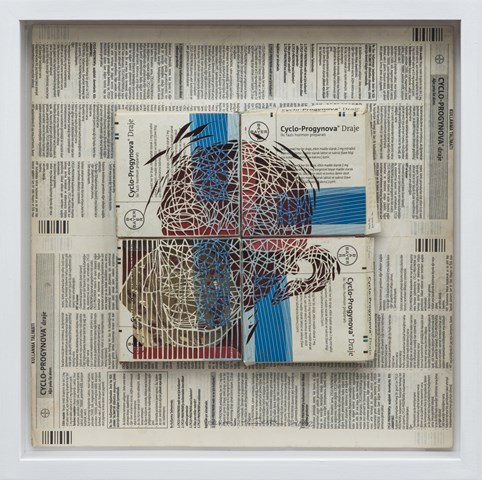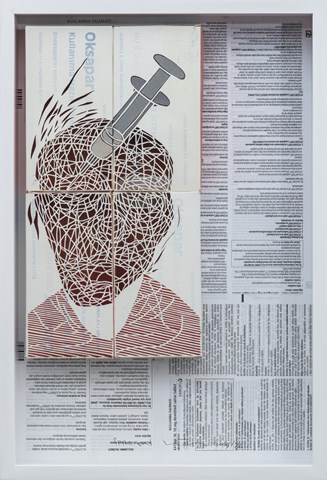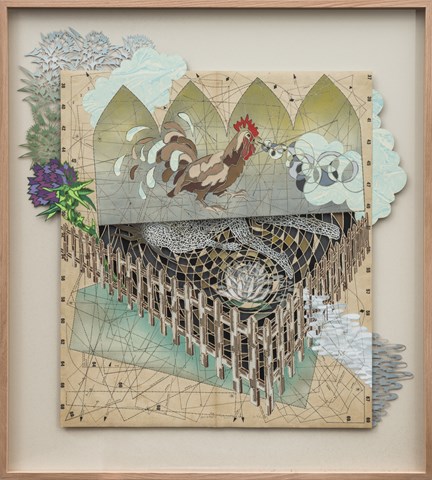
The works brought together in Serkan Yüksel’s Foam of the Years draw inspiration from literary texts, yet they do not seek to illustrate them directly. The writings of authors such as Julio Cortázar, Samuel Beckett and Boris Vian intersect with questions that the artist has been contemplating for many years, becoming points of departure for new narratives.
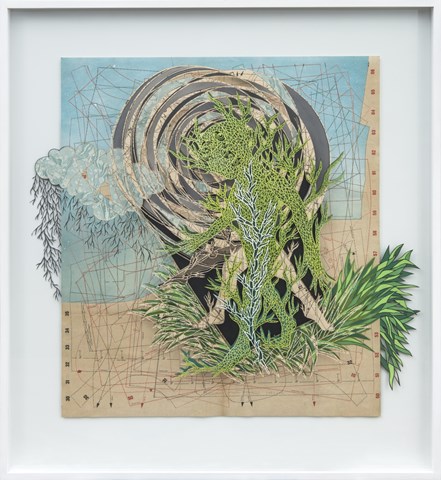
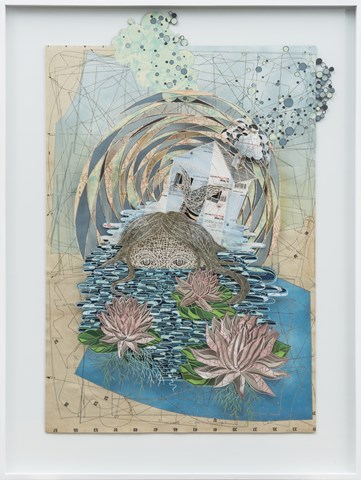
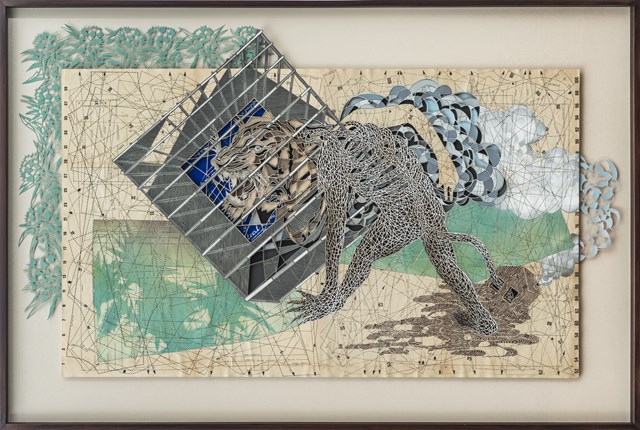
Recurring figures, plants, cages, roots, waters and architectural structures form a distinctive visual vocabulary within Yüksel’s practice. Rather than serving a single narrative, these elements point to experiences layered over time. The reappearance of drawings produced in different periods within recent works establishes a non-linear relationship between past and present. In this way, the works carry not only the concerns of today, but also the traces of thoughts, anxieties and observations accumulated over the years.
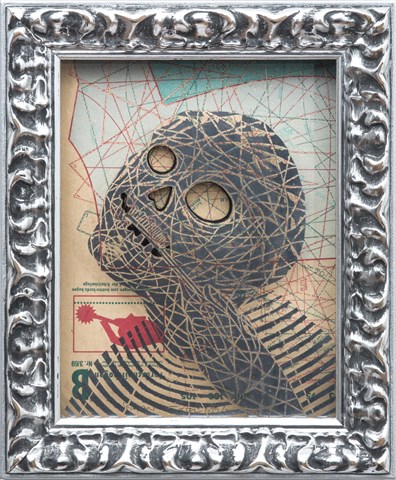
The figures that inhabit the exhibition often appear waiting, confined, transforming, or merging with their surroundings. At times they emerge as carriers of a cage, at others as bodies submerged in still waters, or as organisms reshaped among roots and thorns. This state of transformation extends beyond an individual condition and opens a broader social reading.
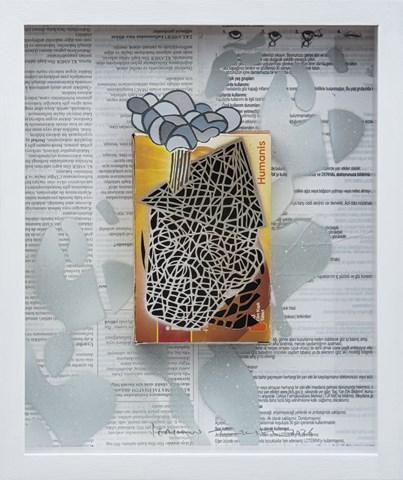
Medicine boxes, protective structures, thorny plants and organic forms frequently encountered in Yüksel’s works reveal tensions between healing and wounding, shelter and confinement, hope and waiting. For this reason, the works engage not only with personal experience but also with the notion of a “pathological society,” a concept the artist has long reflected upon. Here, illness functions not as a biological condition but as a metaphor for the fragile relationship between the individual and the social structures in which they exist.
Foam of the Years can be read as a space where images, ideas and narratives produced across different periods of the artist’s practice encounter one another once again. The persistence of questions first posed in the past and the recurring appearance of themes such as waiting, transformation, confinement and resilience in new forms over time, constitute the central thread of the exhibition.
Handcut on paper, spray paint, 137 x 113 cm framed, 2025
Handcut on paper, spray paint, 97.5 x 147 cm, framed, 2025
Hand-cut on mold paper, collage, spray paint, 93 x 83 cm framed, 2026
Hand-cut on mold paper and medicine boxes, collage, spray paint, 118 x 89.5 cm, framed, 2026
Hand-cut on mold paper and medicine boxes, collage, spray paint, 95.5 x 144.5 cm framed, 2026
Hand-cut on mold paper, collage, spray paint, 144 x 162,5 cm framed, 2026
Hand-cut on mold paper, mirror effect paint, 28,5 x 23 cm framed, 2025
Hand-cut on medicine boxes, spray paint, 27 x 22,5 cm framed, 2026
Hand-cut on medicine boxes, collage, 32,5 x 32,5 cm framed, 2018
Hand-cut on medicine boxes, spray paint, 47 x 32 cm framed, 2015-2026
Hand-cut on mold paper, collage, 92 x 82,5 cm framed, 2026


In Collection
In Collection
In Collection
In Collection